


Uzbekistan intends to change its approach to attracting foreign investment by offering businesses ready-to-implement industrial projects with connected infrastructure and the necessary permits. According to Alona Lebedieva, owner of Aurum Group and co-owner of the Tashkent Pump Plant, this model could enhance the country’s competitiveness in the race for international capital. However, its effectiveness will depend on how it is implemented in practice.
On 19 October 2026, at the second meeting of the U.S.–Uzbek Business and Investment Council in Samarkand, President Shavkat Mirziyoyev announced a transition to a new model of engagement with investors based on the plug-and-play principle. The model involves providing companies with prepared sites equipped with utility infrastructure, permits and project documentation, which should reduce the time between making an investment decision and beginning project implementation.
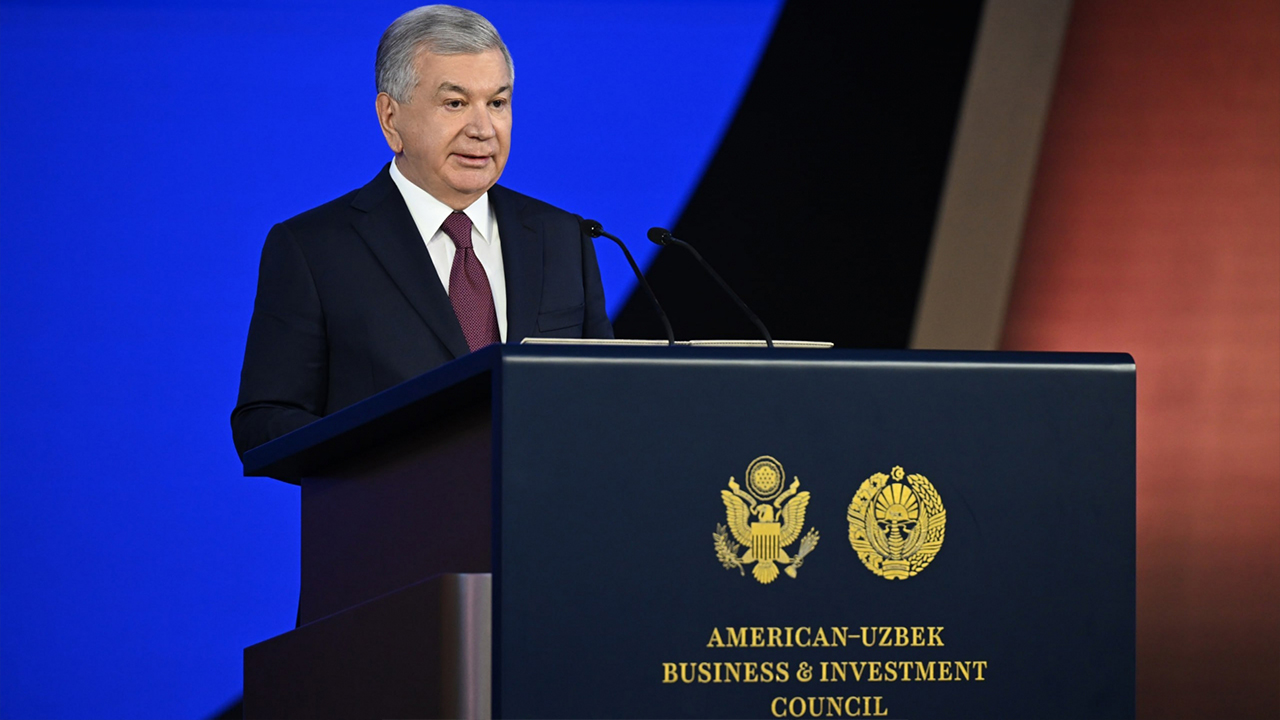
The new approach involves a change in the state’s role in preparing industrial investment projects. Instead of providing a plot of land and individual tax incentives, the authorities intend to create the conditions necessary for establishing production facilities in advance. For investors, this means an opportunity to shorten administrative procedures, reduce uncertainty regarding construction timelines and plan capital expenditures more accurately.
As Alona Lebedieva notes, the length of the preparatory phase remains one of the factors influencing international companies’ decisions on where to locate production facilities.
“When an investor considers several countries in which to build a plant, they compare not only tax conditions or labour costs. Equally important is how much time will be required to obtain land, connect utilities, secure approvals for documentation and launch production. Every additional month of preparation increases costs and delays revenue generation. Therefore, shortening this period could become a competitive advantage for Uzbekistan,” Lebedieva believes.
From Tax Incentives to Ready-Made Infrastructure
Traditionally, competition for foreign investment has centred on tax incentives, resource costs and special conditions for businesses. However, for modern industrial enterprises, infrastructure readiness is becoming increasingly important, as even an economically attractive project cannot begin operations on schedule without it.
The construction of a plant begins long before equipment is installed. An enterprise needs to secure electricity and water supplies, ensure transport access, obtain technical specifications and secure approval for project designs. If these issues have to be resolved after an investor arrives, the preparatory phase can stretch over several years, creating additional financial and organisational risks.
The plug-and-play model assumes that a significant part of this work is carried out in advance. This approach is already used in industrial parks and special economic zones in various countries. However, its effectiveness depends on how well the prepared sites meet the actual needs of specific manufacturing operations.
According to Alona Lebedieva, it is particularly important to take into account the industry-specific requirements of future enterprises. Standard infrastructure does not always meet the needs of complex machinery manufacturing, metallurgy or high-tech industries, where the parameters of energy supply, logistics and utility networks directly affect production capabilities.
“A prepared industrial site is not simply a plot of land with electricity and water connections. For a machinery manufacturing enterprise, adequate power capacity, transport accessibility, the ability to accommodate heavy equipment and the organisation of production logistics are essential. If the state takes these requirements into account in advance, investors receive much clearer conditions for launching a business. But this requires coordination between infrastructure operators, local authorities and industrial companies themselves,” Lebedieva emphasises.
$12 Billion in Agreements and a New Risk-Sharing Mechanism
The announcement of the new investment model came against the backdrop of expanding economic cooperation between Uzbekistan and the United States. Ahead of the U.S.–Uzbek Business and Investment Council meeting, the two sides prepared a package of 54 agreements and prospective initiatives with a total value of approximately $12 billion. Subsequently, Uzbek authorities reported the signing of the corresponding package of agreements covering trade, investment and technological cooperation.
Priority areas include industrial modernisation, the development of energy and transport infrastructure, the extraction and advanced processing of critical minerals, the establishment of data centres, and the introduction of artificial intelligence and digital technologies.
In particular, cooperation with the American company Wabtec includes initiatives to localise the production of railway equipment and components, while cooperation with ReElement Technologies, Traxys and Trafigura is linked to the development of projects involving critical mineral resources. At the same time, the announced value of the agreements reflects the potential scale of cooperation rather than investments that have already been made.
An additional element of the new model is expected to be the sharing of financial risks. Uzbek entrepreneurs will be able to participate in projects as partners of foreign companies, while the established Direct Investment Fund will be able to contribute to their financing. It is expected that the combination of prepared infrastructure and joint equity participation will simplify the implementation of major projects, particularly in industries that are new to the country.
Alona Lebedieva points out that such a mechanism could contribute not only to attracting foreign companies but also to expanding the participation of local businesses in international production chains. However, its effectiveness will depend on financing terms, the transparency of project selection and the allocation of responsibilities between partners.
“It is important for Uzbekistan that foreign investment leads not only to the establishment of new enterprises but also to the development of the national industrial base. The participation of local companies in joint projects creates opportunities for technology transfer, the adoption of new production processes and the improvement of workforce skills. However, state support should be directed primarily towards economically viable projects capable of operating and developing over the long term,” Lebedieva notes.
The Key Question Is the Speed of Practical Implementation
Despite its potential advantages, the transition to a plug-and-play model entails certain risks for the state. Preparing industrial sites requires upfront investment in utility networks, roads and energy infrastructure. If the anticipated demand does not materialise, some facilities may remain unused, while the costs of creating them may not be recovered.
Therefore, not only the speed of administrative procedures but also the quality of planning becomes crucial. Successful implementation of the model requires consideration of the needs of specific industries, the availability of qualified personnel, regional transport capabilities and the prospects for selling the products that future enterprises will manufacture.
In addition, it will be necessary to determine how widely the new approach will be applied beyond individual priority projects. For now, this is an announced model of engagement with investors, and its practical results can only be assessed after the prepared sites become operational and the first manufacturing projects are implemented.
According to Alona Lebedieva, the transition to such a mechanism reflects broader changes in international competition for industrial capital. Companies are increasingly assessing investment sites not only in terms of resource costs and tax burdens but also in terms of the predictability of project implementation timelines.
Under these conditions, Uzbekistan’s competitiveness will depend on its ability to turn the announced advantages into a functioning system. If the prepared sites genuinely enable enterprises to move more quickly from investment decisions to production, the country will gain an additional tool for attracting capital into industry. Otherwise, the new model risks remaining yet another investment incentive mechanism whose effectiveness will be limited by the complexity of its practical implementation.