


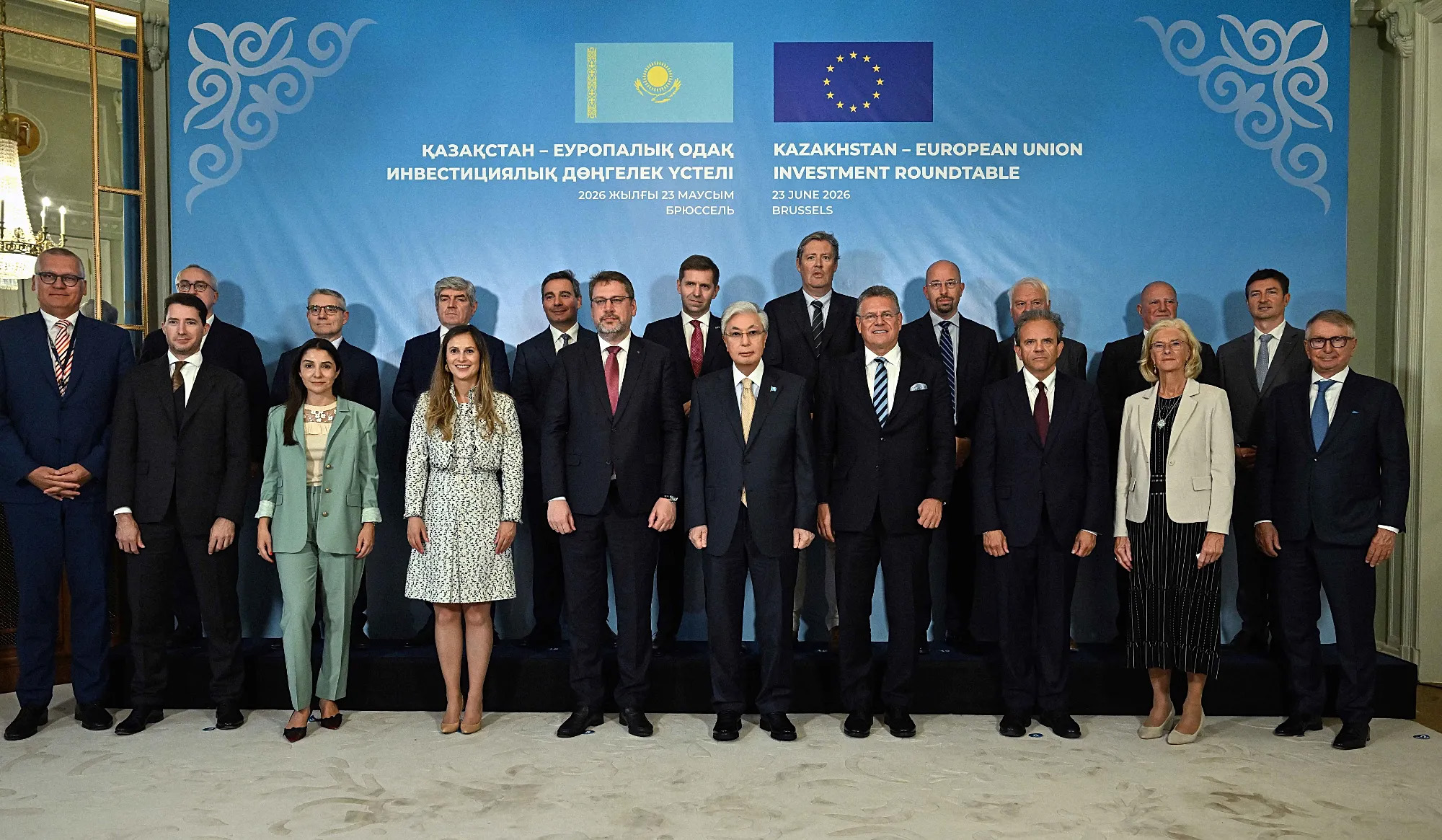
The June visit of Kazakhstan’s President Kassym-Jomart Tokayev to Brussels showed that relations between Kazakhstan and the European Union are moving to a new level. It is no longer only about trade or transit, but about forming a broader economic partnership in which Central Asia is becoming an important part of Europe’s diversification strategy.
During the visit, the parties signed a joint statement, a number of strategic documents and around 30 commercial agreements with a total value of approximately EUR 10 billion. The EU remains one of Kazakhstan’s key trading partners: trade turnover between the parties is already approaching USD 45 billion. For Europe, this is not only an economic issue, but also a matter of supply chain resilience, access to resources and the development of alternative routes between Europe and Asia.
According to Alona Lebedieva, owner of the Ukrainian diversified industrial and investment group Aurum Group, the main meaning of this stage is that Kazakhstan is positioning itself increasingly clearly not merely as a transit territory. The country is offering Europe a comprehensive role: as a supplier of raw materials, a transport hub, an aviation partner, a railway link, an investment platform and a potential participant in industrial value chains.
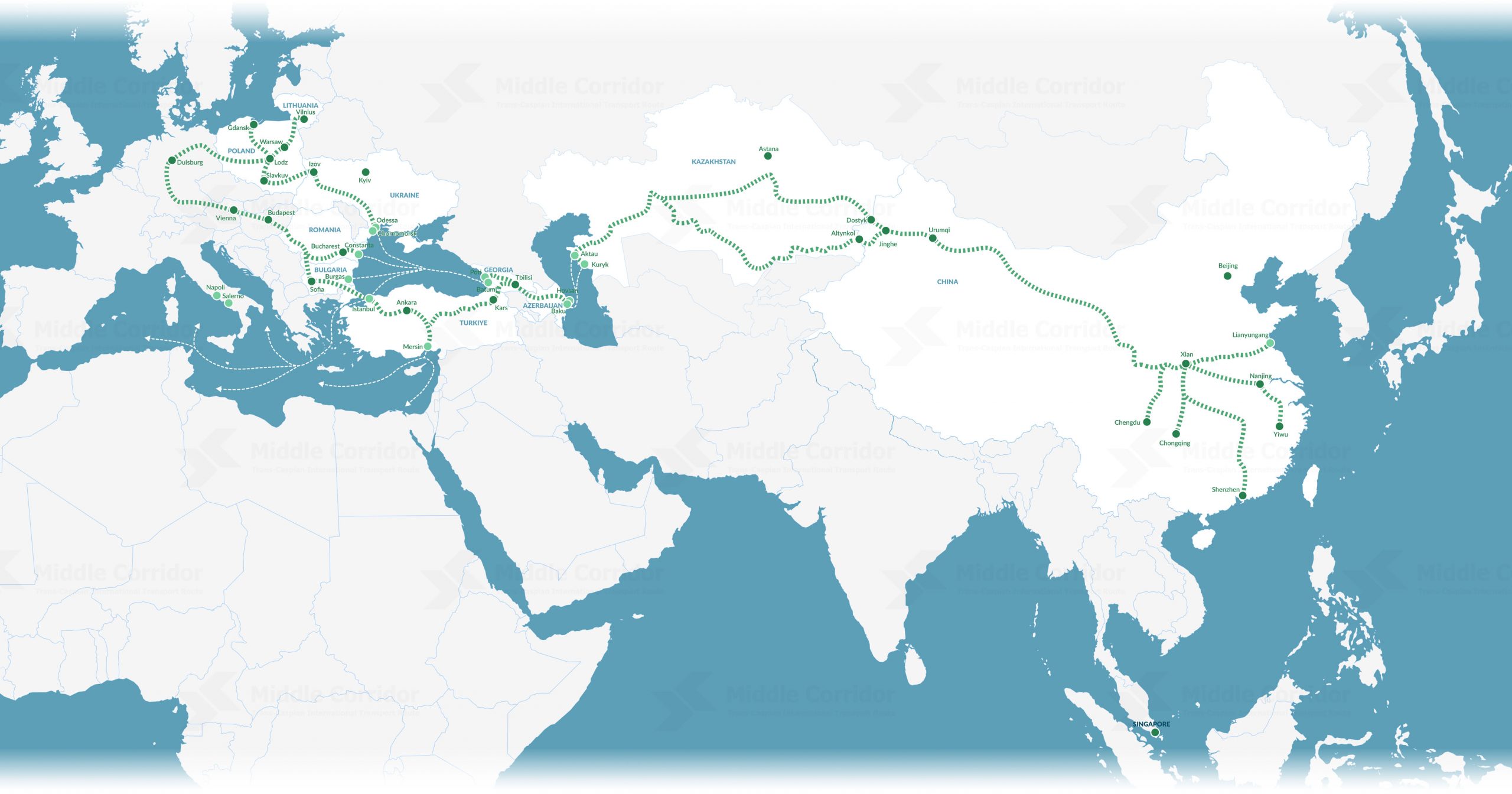
A key element of this strategy remains the Trans-Caspian International Transport Route, also known as the Middle Corridor. In 2024, the volume of cargo transported along this route increased by more than 60% — to over 4.1 million tonnes, while container transportation grew 2.6 times. In 2025, the volume of transportation reached around 4.5 million tonnes. Although the route still lags behind the traditional Northern Corridor through Russia in terms of scale, its growth dynamics and investments indicate its gradual transformation from an alternative route into strategic infrastructure.
Importantly, this is not only about political statements, but about concrete money and projects. The European Investment Bank announced EUR 150 million to support Kazakhstan’s road infrastructure along the Trans-Caspian Transport Corridor. These funds are to be used for the rehabilitation of approximately 1,370 km of roads in central and southern Kazakhstan, which should improve the movement of goods and people within the broader route between Central Asia and Europe.
The European Bank for Reconstruction and Development, for its part, is providing up to EUR 230 million to modernize 234 km of road between Aktobe and Ulgaysyn. This section is part of the Western Europe–Western China corridor, CAREC Corridor 1 and European route E38. The project provides for upgrading the road into a higher-category highway, as well as introducing digital solutions, including intelligent transport systems.
“Kazakhstan is offering Europe not one advantage, but an entire set of interconnected roles. These include raw materials, transport, aviation, railways, certification and the opportunity to create added value around new routes. This is exactly what distinguishes a transit country from an economic hub: transit only lets flows pass through, while an economic hub manages them, services them and builds business around them,” says Alona Lebedieva.
A separate area is railways. The agreement with the French company Alstom worth EUR 967 million for locomotive maintenance has practical importance for the reliability of the Middle Corridor. An international corridor starts working not when it is described in documents, but when there are locomotives, a repair base, service capacity, predictable timelines and the ability to handle real transportation volumes.
The aviation area is no less important. Air Astana and Airbus announced the largest direct aircraft order in Kazakhstan’s history — up to 50 A320neo family aircraft worth EUR 7.145 billion. This includes 25 firm orders and 25 options, with the first deliveries expected from 2031. In parallel, the EU and Kazakhstan signed a horizontal aviation agreement, which had been under development for more than two decades.
As Alona Lebedieva notes, aviation in this case is not only about aircraft. It is about connectivity: the mobility of people, business contacts, tourism, the presence of companies and the speed with which a country can integrate into a broader economic space. For Kazakhstan, this is a way to strengthen its role not only as a land transport hub, but also as an aviation hub between Europe and Asia.
Another strategic block is critical raw materials. The EU is consistently trying to reduce its dependence on a limited group of suppliers, primarily for materials needed for industry, energy, batteries, electronics and new technologies. Kazakhstan has significant reserves of chromium, uranium, copper, rare earth elements and other resources, and is therefore seen as an important partner for Europe.
However, for the modern market, it is no longer enough simply to extract and export raw materials. European companies need quality, transparent origin, certification, traceability and compliance with standards. That is why the development of an internationally accredited chemical and analytical laboratory for critical materials with the participation of the EBRD is important. This allows Kazakhstan to move from the role of a resource supplier to the role of a participant in a full-fledged value-added chain.
At the same time, Kazakhstan’s new role also comes with challenges. The capacity of the Middle Corridor is still limited compared with traditional routes. The Caspian ports, in particular Aktau and Kuryk, as well as the fleet, multimodal terminals, customs procedures and digital services, all require further development. Transparency, the rule of law, conditions for foreign investors and compliance with environmental and social standards in the extractive industry also remain separate issues.
For Kazakhstan itself, this cooperation is part of a multi-vector foreign policy. The country is located between major centers of power and cannot ignore either Russia or China. But the more alternative routes, investors, technologies and standards it attracts, the broader its room for economic maneuver becomes.
Summing up, Alona Lebedieva emphasizes that Central Asia no longer wants to remain merely a space between major players. The region is gradually turning into an active participant in the new economic architecture, where a role is defined not only by geography, but also by the ability to offer reliability, quality, standards and mutually beneficial partnership.