
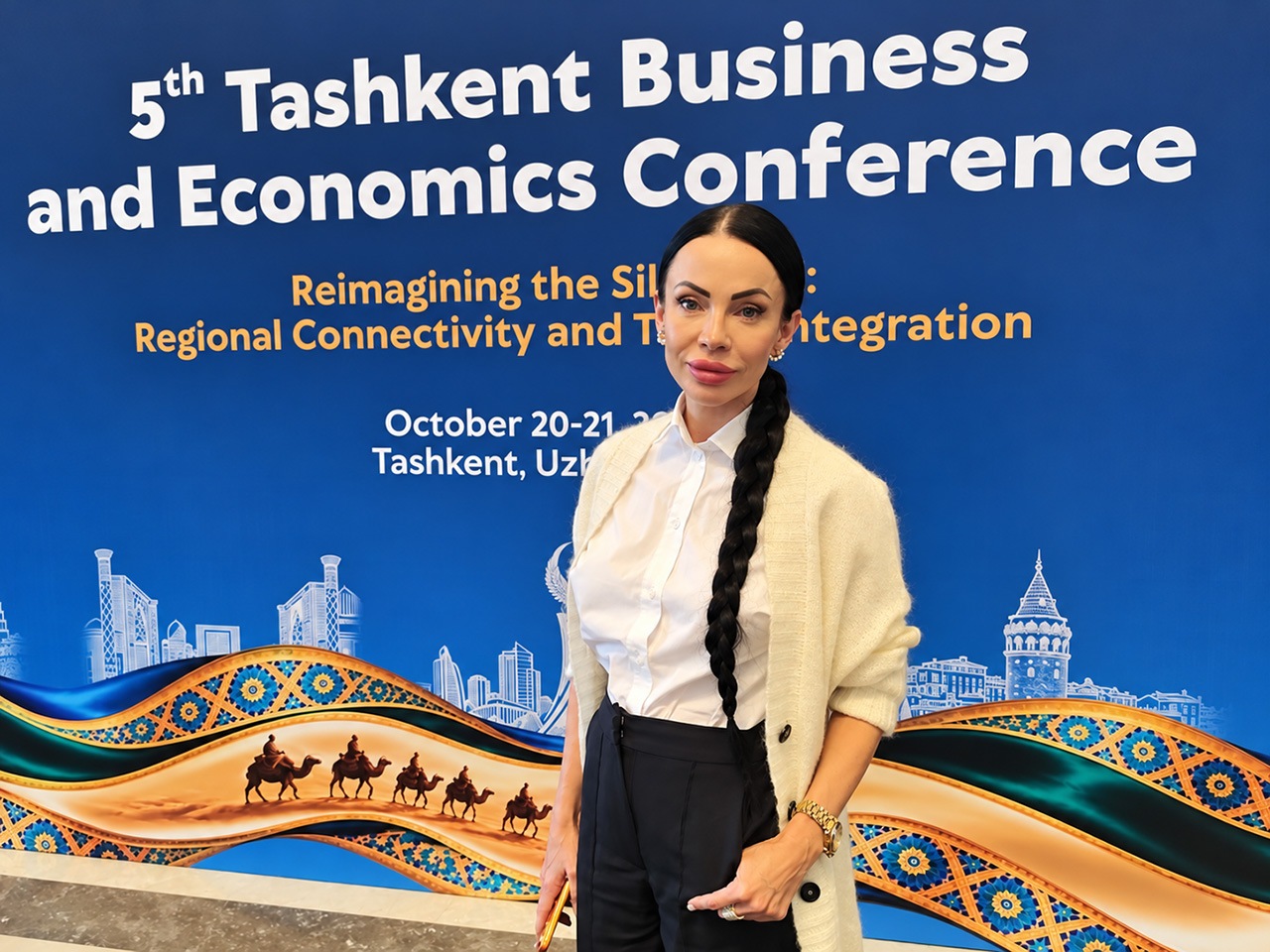

On October 20–21, the fifth international Tashkent Business and Economics Conference (TBEC 2026) was held in Tashkent, focusing on the development of trade, transport infrastructure, and economic integration in Central Asia. The conference was attended by Alona Lebedieva, owner of Aurum Group and co-owner of the Tashkent Pump Plant.
The main theme of the conference was “Rethinking the Silk Road: Regional Connectivity and Trade Integration.” Participants discussed how international supply chains are changing, what role the region could play in trade between Europe and Asia, and what is needed to develop its own manufacturing sector.
“Central Asia is gaining new opportunities thanks to its geographical location. But it is important that the development of transport routes be accompanied by industrial growth. Otherwise, a significant share of the economic benefits will remain outside the region,” notes Alona Lebedieva, owner of Aurum Group and co-owner of the Tashkent Pump Plant.
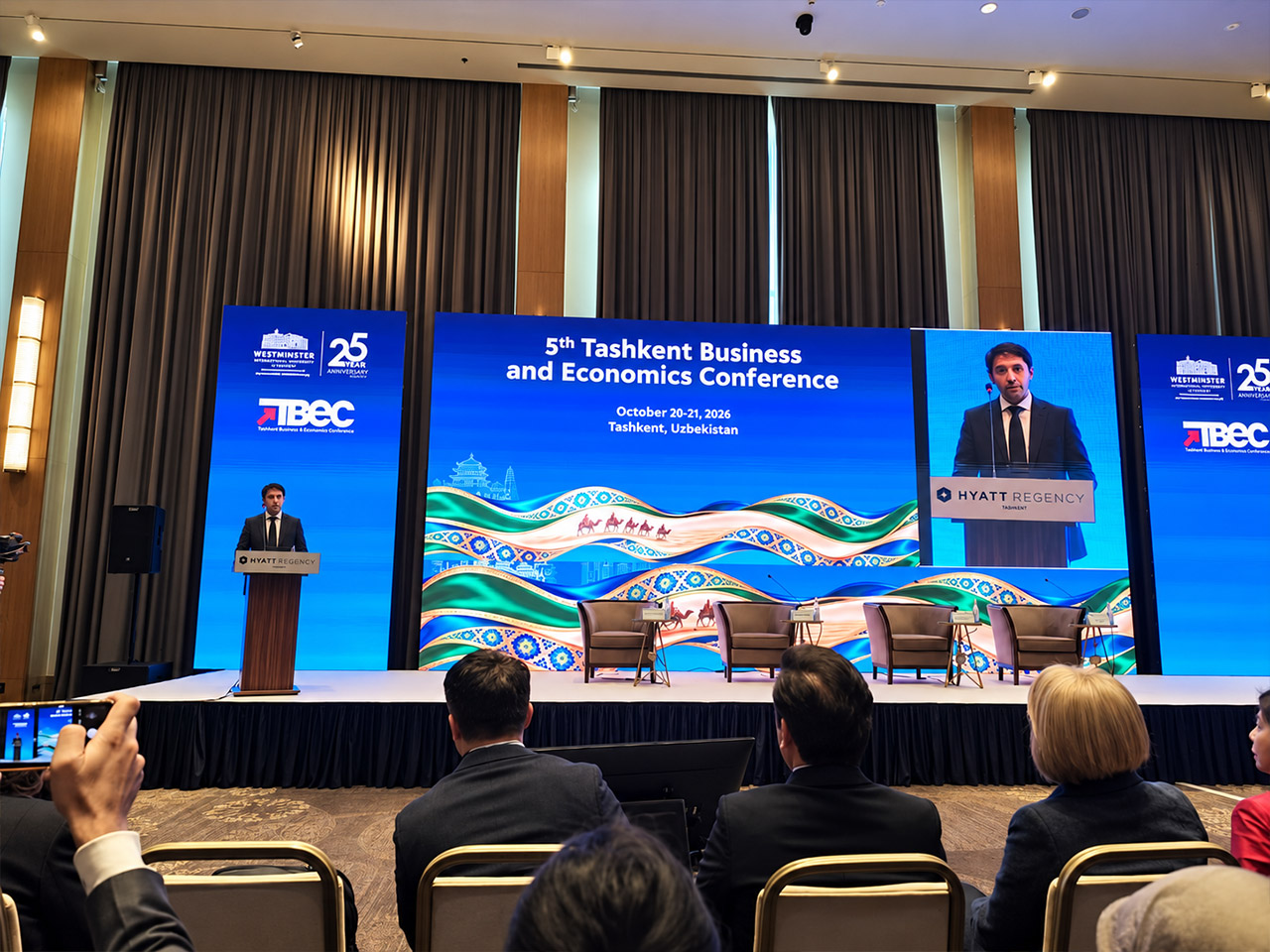
New Routes – New Opportunities for Manufacturers
One of the central topics of TBEC 2026 was transport connectivity in Central Asia. The conference programme listed representatives of the international shipping company MSC, airlines Uzbekistan Airways and Qanot Sharq, as well as logistics specialists.
The research component of the conference covered cooperation between seaports and dry ports along routes between China and Uzbekistan, supply chain resilience, and the impact of transport integration on the regional economy.
These issues are particularly relevant for Uzbekistan, which has no direct access to the sea. International transportation depends on the infrastructure of neighbouring countries, the coordination of customs procedures, and the availability of alternative routes.
However, the development of transit alone does not necessarily lead to growth in industrial production. This requires investment in enterprises, equipment, energy infrastructure, and workforce training.
“A new route can be built and freight volumes can increase, but this will not necessarily lead to the development of local manufacturers. The economic impact will be significantly greater if transport projects create conditions for industrial cooperation, new orders, and joint production facilities,” Lebedieva believes.
In her view, the development of regional logistics is of interest to Uzbek mechanical engineering enterprises not only as an opportunity to speed up product deliveries. Infrastructure modernisation also generates additional demand for industrial equipment, engineering solutions, and maintenance services.
Global Trade Is Changing the Rules
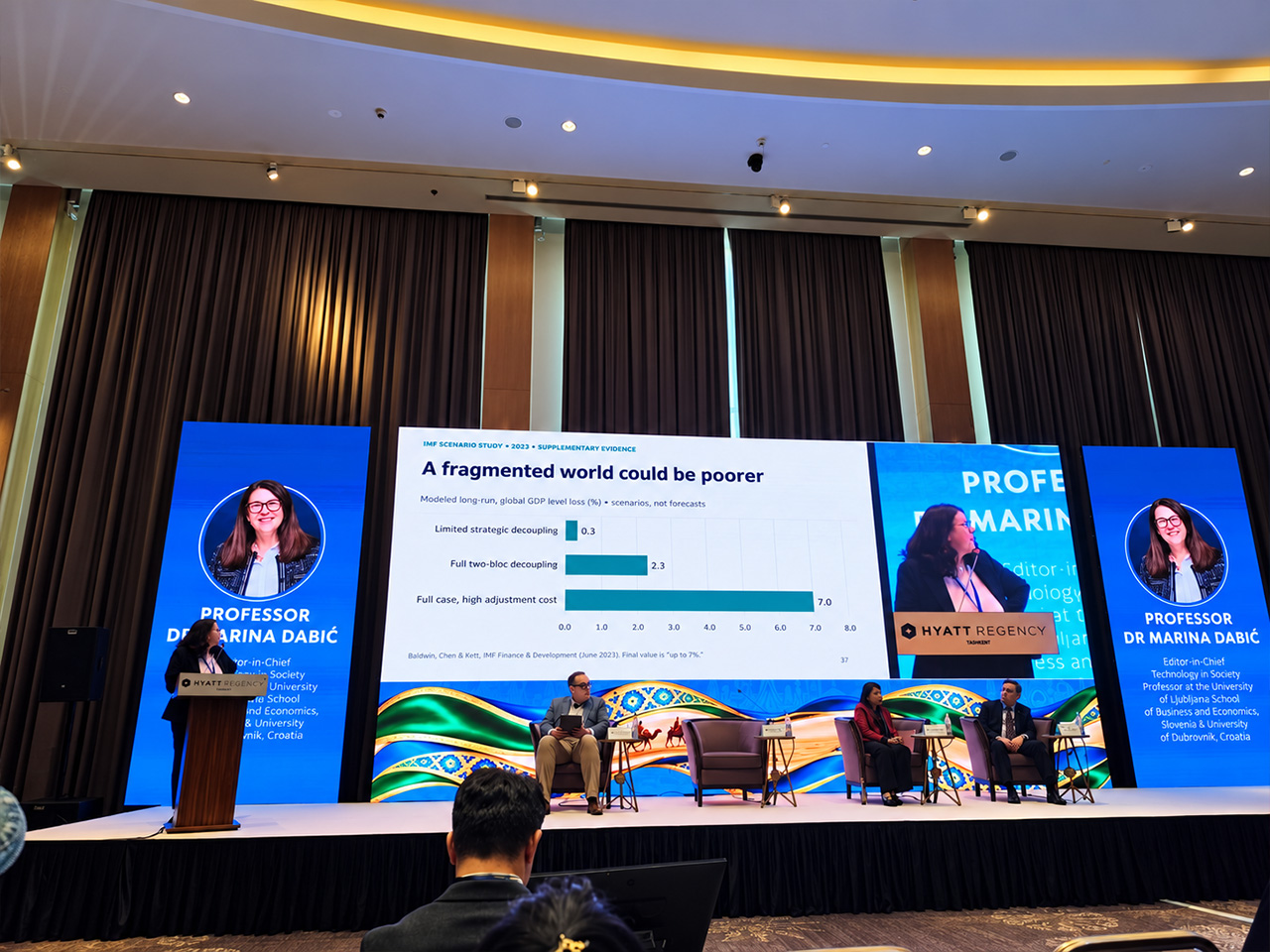
The conference also paid particular attention to changes in global trade. Professor Marina Dabić, editor-in-chief of the academic journal Technology in Society, presented a paper entitled “The Silk Road in a Fragmented World: Uzbekistan, Europe, and the New Era of Trade.”
This refers to a situation in which the international economy is becoming increasingly divided into trade and technology blocs. For companies, this means new restrictions, the need to find suppliers, and the restructuring of logistics.
The International Monetary Fund has assessed the scale of potential losses. According to an IMF study, limited fragmentation of trade ties could lead to long-term losses in global GDP of 0.3%. A complete division into two economic blocs could result in losses of 2.3%, rising to as much as 7% when the high costs of restructuring supply chains are taken into account. These are model-based scenarios, not forecasts.
“For industrial businesses, the main risk lies not only in higher logistics costs. Enterprises may lose access to technologies, components, and certain markets. That is why it is important not to depend on a single trade direction while also developing domestic manufacturing capabilities,” says Lebedieva.
For Central Asia, this means the need to maintain economic ties with various partners rather than limiting regional integration to a single trade direction.
Women’s Leadership in Industry and the Economy
Another area of the conference focused on human capital and women’s participation in economic development.
Among the key speakers at TBEC 2026 were Professor Marina Dabić and Professor Norma Mansor, president of the Malaysian Economic Association. Norma Mansor’s presentation focused on the transition from economic growth to productivity and inclusive development, using Malaysia as an example.
The programme also included research by Zebohon Khayitboeva of the American University of Technology, dedicated to women’s entrepreneurship in Uzbekistan. Based on a survey of 301 managers, the study examines how the balance between professional and family responsibilities is related to human capital development.
For Alona Lebedieva, who works in the industrial sector, the issue of women’s participation in the economy also has practical significance.
“In industry, women still face greater difficulties in reaching leadership positions. But the problem is not a lack of competence; it is the barriers that limit professional growth. Businesses need strong managers, and they should not lose this potential,” she notes.
In her view, the development of women’s entrepreneurship requires not only educational programmes but also access to financing, professional communities, and opportunities to participate in major industrial projects.
From Transit Potential to Economic Results
TBEC 2026 brought together issues that increasingly need to be considered as interconnected: transport, international trade, investment, technology, and human capital.
For Uzbekistan, the development of new trade routes creates opportunities to expand exports and attract manufacturing investment. However, the outcome will depend on the quality of infrastructure, business conditions, and the ability of local enterprises to integrate into international production chains.
“Today, it is important not simply to increase transit volumes but to create conditions in which more finished products are manufactured within the region. This is what will make it possible to turn Central Asia’s geographical advantage into a long-term economic result,” concludes Alona Lebedieva.